
The Narrator as Guardian of the Story
The Little PrinceThe narrator's destiny shifts from desert survivor to custodian who must keep the Little Prince's memory alive through words and drawings.
increasing Bearing strength in each event
 decreasing
Bearing strength in each eventdecreasingWitness in the Sand
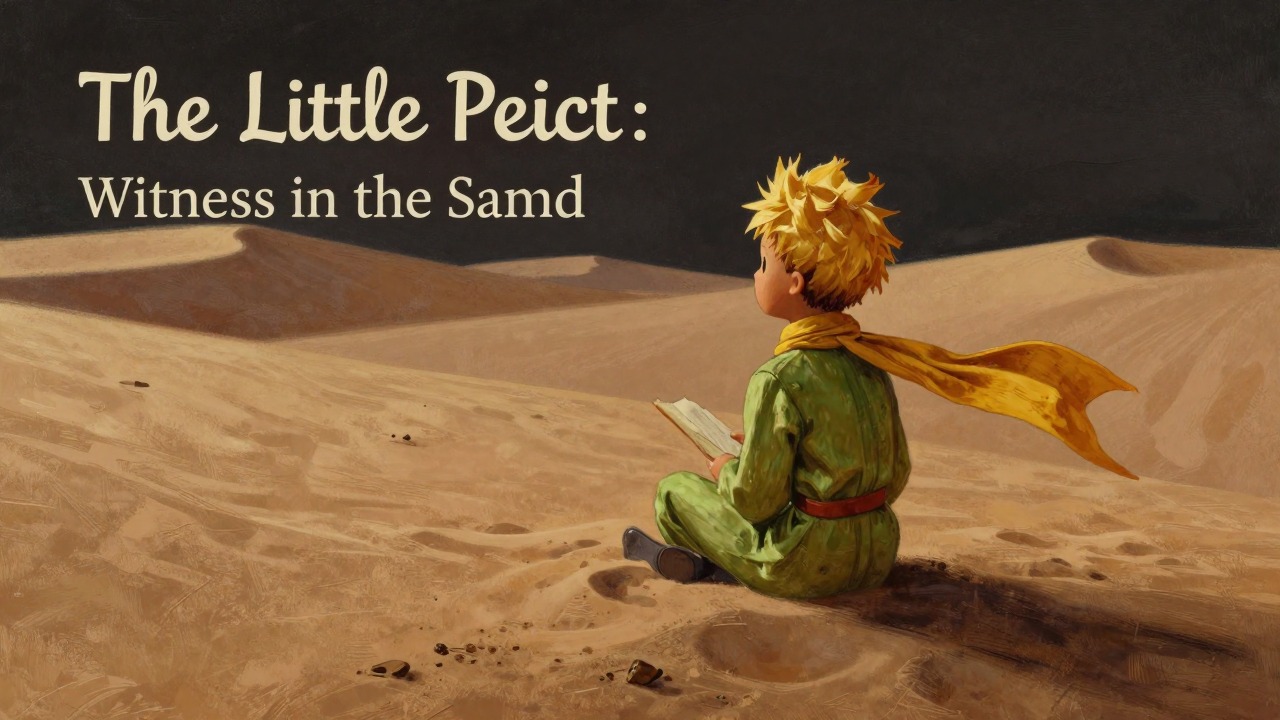
Witness in the Sand
Context
The narrator was present when the Little Prince appeared and disappeared. His role as witness begins with those moments in the African desert.
Development
He did not ask for this role; it was given by circumstance. But once the prince vanished, he was the only one left to remember. The burden of testimony fell to him.
Significance
Witness in the sand establishes the narrator's authority to tell the story. Without him, the prince's visit would vanish without a trace.
Keeper of Absence

Keeper of Absence
Context
After the prince's disappearance, the narrator becomes the keeper of an absence. He has no body, no proof, only the desert landscape and his memory.
Development
He guards the details: the muzzle, the strap, the glass globe. These small objects are his relics. He keeps their memory alive in silence for six years.
Significance
Keeper of absence makes the narrator a custodian of an invisible heritage. His later story is an offering of that heritage.
Six Years of Silence
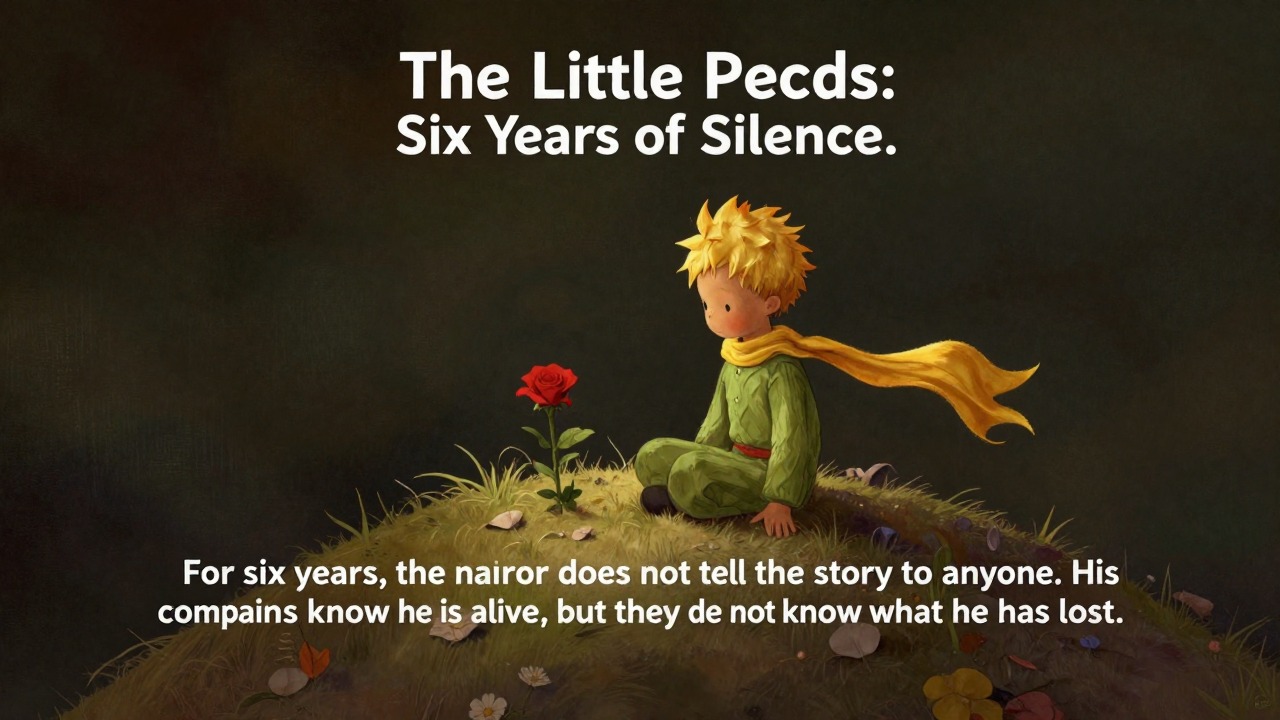
Six Years of Silence
Context
For six years, the narrator does not tell the story to anyone. His companions know he is alive, but they do not know what he has lost.
Development
The silence is a form of protection. Telling the tale would force him to relive the loss. It also preserves the story's purity, keeping it from being diluted by casual listeners.
Significance
Six years of silence shows how heavy the guardianship is. The story matures in the dark before being released.
Author of the Epilogue
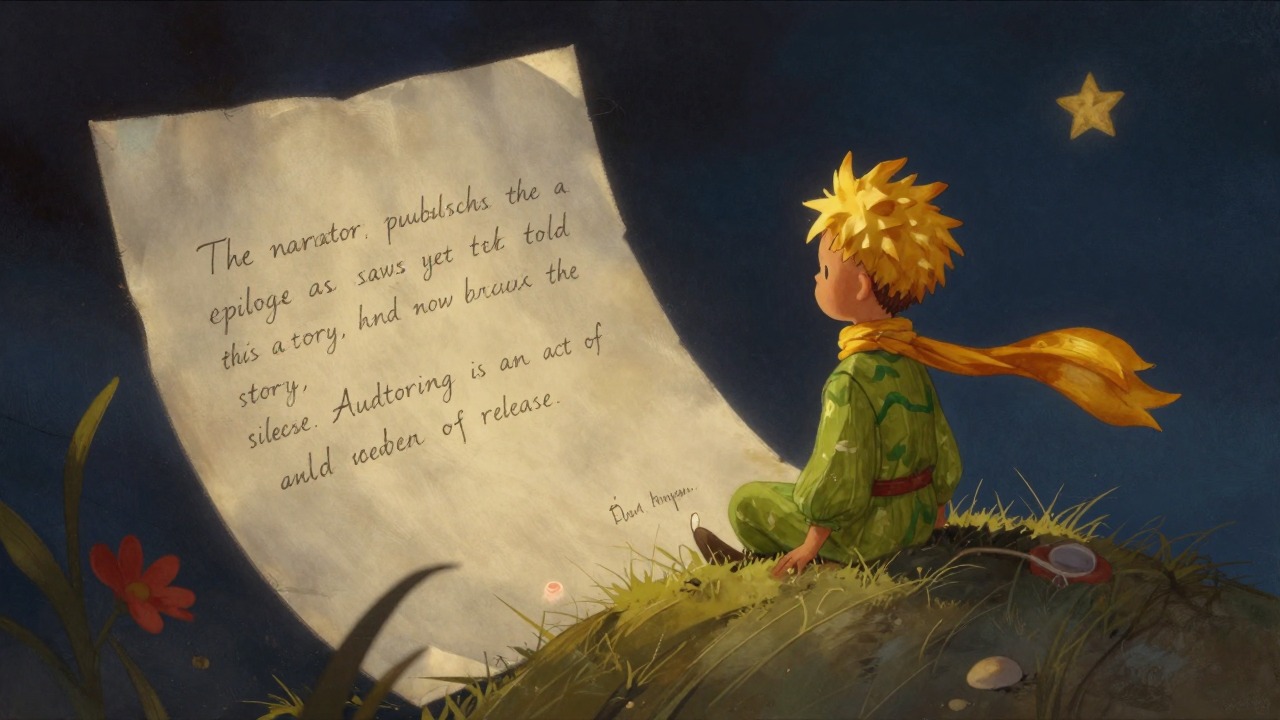
Author of the Epilogue
Context
The narrator publishes the epilogue as a written confession. He says he has never yet told this story, and now he breaks the silence. Authoring is an act of release.
Development
By writing, he turns private memory into public inheritance. The story is no longer his alone; it belongs to readers who love the Little Prince.
Significance
Author of the epilogue completes the narrator's transformation from witness to storyteller. He accepts the role of guardian for all future readers.
One Who Waits
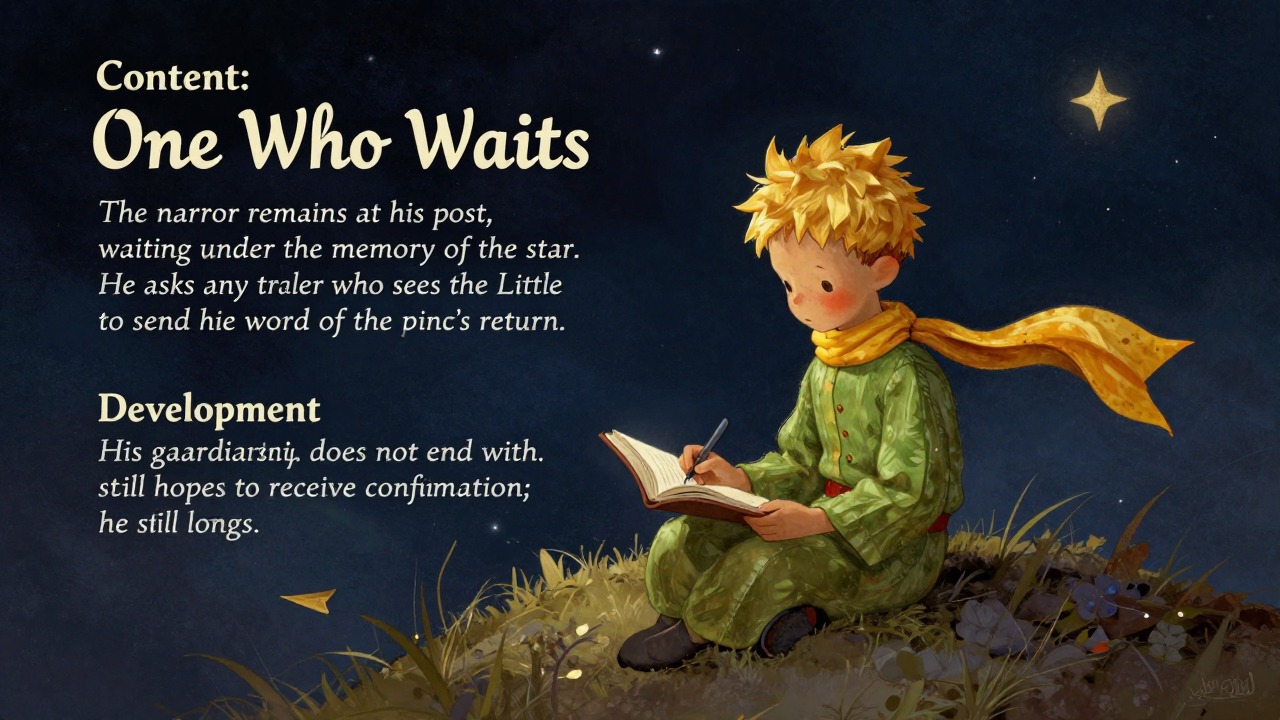
One Who Waits
Context
The narrator remains at his post, waiting under the memory of the star. He asks any traveler who sees the Little Prince to send him word of the prince's return.
Development
His guardianship does not end with writing. He still hopes to receive confirmation; he still longs to know whether the Rose survived. The wait is part of his identity.
Significance
One who waits makes the narrator a permanent figure of longing. His fate is to keep the door open for the prince's return.
during the desert encounter with the Little Prince
after the prince departed, when the narrator carried the memory alone
in the interval between the loss and the epilogue
when the narrator begins to speak in the present text
at the end of the epilogue, when the narrator requests word of the prince
